1. Introduction: A Vision for Transnational Educational Synergy
In the burgeoning era of Industry 4.0, the digitalization of public and private services is no longer a peripheral trend but a core requirement for economic participation. As globalization accelerates, the "Revolution of Industry 4.0" necessitates a workforce capable of rapid adaptation, placing Vocational Education and Training (VET) at the heart of geopolitical and economic strategy. The Developing Capacity for VET Systems in Western Balkans (DC-VET WB) project serves as a strategic lever for regional stability, designed to modernize educational frameworks in Albania, Montenegro, Bosnia Herzegovina, and Kosovo.
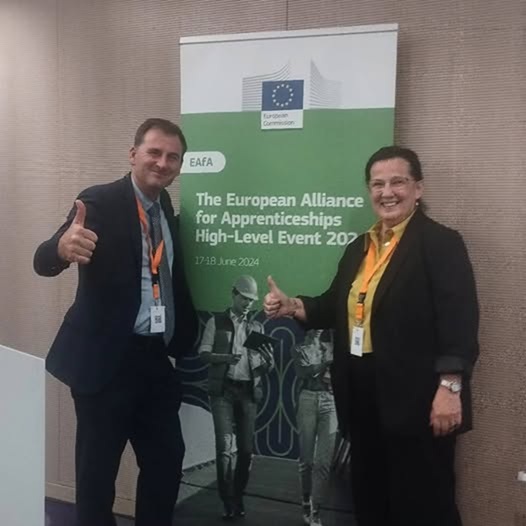
By addressing the specific needs of these nations, the initiative seeks to align regional labor markets with European standards. This project is a masterclass in educational diplomacy, fostering a cross-border synergy that transcends traditional classroom boundaries. At the forefront of this mission is IES Pedro de Tolosa, a Spanish institution whose institutional maturity and technical expertise have positioned it as a benchmark partner, driving the systemic transformation required to meet the demands of a globalized digital economy.
2. The Blueprint of Innovation: Project Objectives and Target Sectors
The DC-VET WB initiative is precision-targeted at high-growth sectors: Information Technology (IT), Electronics, and Automation. The strategic alignment of the project is operationalized through three primary pillars:
- Strengthening Company Cooperation: Closing the gap between theoretical curricula and industrial reality to ensure market-relevant training.
- Boosting Internationalization: Creating a catalytic network for sharing pedagogical innovation and professional standards across borders.
- Inclusive Training Offers: Engineering equitable educational pathways to ensure that technical progress does not leave diverse populations behind.
IES Pedro de Tolosa's leadership in this project is anchored in its specific technical departments. The school offers a Grado Medio in "Instalaciones Electrotécnicas y Automáticas" and a Grado Superior in "Energías Renovables." These departments provide the tangible, industrial foundation necessary to mentor Western Balkan institutions in automation and electronics, ensuring that the transfer of knowledge is rooted in the reality of modern Spanish and European industrial standards.
3. IES Pedro de Tolosa: A Local Powerhouse on the European Stage
Situated in San Martín de Valdeiglesias, Madrid, IES Pedro de Tolosa (Center Code: 28045645) exemplifies how a "small country town" institution can act as a global protagonist. Recognized as a European School Ambassador, the center manages a diverse student body of approximately 875 pupils. While the institution maintains a trilingual identity (Spanish-English-French), its Bilingual Program (English) is strategically integrated into the ESO (Secondary Education) level to provide a flexible, non-segregated learning environment.
The school’s participation in the Model European Parliament (MEU), where students simulate the roles of MEPs, underscores its commitment to instilling European values. For a rural community, this level of internationalization is transformative; it builds institutional capacity and "opens horizons" that were previously inaccessible. By participating in DC-VET WB, IES Pedro de Tolosa does not merely represent Spain; it acts as a laboratory for integrating Work-Based Learning (WBL) and digitalization, proving that local commitment can yield significant transnational impact.
4. Quantifiable Impact: Key Features and Success Metrics
The following data highlights the project's success in implementing a pervasive capacity-building action across the Western Balkans. These metrics reflect the project's legacy in fostering institutional growth and teacher professionalization.
|
Key Features |
Quantitative Impact |
|
Teacher Upskilling |
12 WB teachers participated in EU-based learning as "multipliers" |
|
WBL Testing Phase |
4 VET schools in WB countries introducing new WBL practices |
|
New Educational Practices |
4 new educational practices on WBL introduced and documented |
|
Industrial Exposure |
6 companies visited by WB teachers in Spain, Italy, and Finland |
|
Academic Exchange |
6 schools visited by WB teachers in Spain, Italy, and Finland |
|
Social Inclusion Transfer |
20 members of VET staff involved in transferring inclusive practices |
|
E-Learning Training |
40 members of VET staff completed specialized E-Learning courses |
|
Blended Mobility |
35 members of staff involved in project preparation and implementation |
|
Digital Resources |
6 Virtual study visits produced for industrial settings |
These visits to Spanish and European companies represent a sophisticated transfer of best practices. By observing high-level industrial settings, Western Balkan educators return to their home countries as multipliers, equipped to implement European-standard Work-Based Learning.
5. Pillars of Transformation: Work-Based Learning (WBL) and Social Inclusion
The qualitative success of the DC-VET WB project is most evident in its approach to Work-Based Learning and Social Inclusion. The testing phase successfully introduced four new documented educational practices into Western Balkan schools, bridging the gap between education and employment. Furthermore, the production of six virtual study visits serves as a vital digital solution to geographical and economic barriers, allowing students in developing regions to access high-tech industrial environments that would otherwise remain out of reach.
Social inclusion is not treated as a theoretical goal but as a strategic necessity. IES Pedro de Tolosa’s leadership here is credible and reality-based, as the school itself manages a heterogeneous student body with a high number of immigrant students. This lived experience in managing diversity allows the Spanish delegation to offer authentic insights into "Social Inclusion Transfer." In the modern labor market, inclusive training ensures that a nation’s entire human capital is mobilized, making it a competitive imperative for the stability of the Western Balkans.
6. Conclusion: The Future of VET Integration
The DC-VET WB project has established a definitive blueprint for the modernization of VET systems in Albania, Montenegro, Bosnia Herzegovina, and Kosovo. Through the leadership of IES Pedro de Tolosa and the support of the European Commission, this initiative has proven that VET institutions can be more than just schools—they can be engines of regional economic alignment.
For continued learning and resources, the project maintains an active portal at https://dcvetwb.eu/. Ultimately, the success of this initiative underscores a fundamental truth: the essential skills for the future—technical mastery, digital literacy, and social adaptability—can only be acquired through active, reality-based learning experiences that connect local talent to the global stage.
 We have been taking part in VET Erasmus programs for a long time now and we are currently part of Erasmus+ consortiums programs as well as the DC_VET program involving Balkan countries.
  ces wit other countries.
 Students set up European Fairs with stands representing the different countries to make everyone at the school know about the culture, customs and traditions from every country. They created nice stalls with flags, leaflets with information to give in their corresponding stalls as well as making typical food from each country that we were so lucky to taste.